Why Edmonton's Freeze-Thaw Cycles Ruin Old Stucco
Why Edmonton's Freeze-Thaw Cycles Ruin Old Stucco
Old cement plaster stucco across Northwest Edmonton is reaching a breaking point. Temperature swings from minus thirty to plus thirty push walls to move, crack, and take on water. Homeowners searching for stucco repair Northwest Edmonton often notice the same early warning signs after a harsh winter. Hairline cracks map across the wall. A horizontal bulge under a second-floor window grows each spring. White efflorescence blooms on a south wall near a downspout. These are not cosmetic issues. In this climate, they point to a cycle of seasonal expansion, moisture intrusion, and substrate damage that will not stop on its own.
This is where local knowledge matters. Castle Downs homes from the 1970s and 1980s, Palisades exteriors from the 1990s, and the oldest houses in Westmount, Calder, and Athlone have very different wall assemblies, flashing details, and curing histories. Yet they share the same freeze-thaw burden. The way a contractor reads those patterns and plans a repair in stucco repair Northwest Edmonton work determines whether the fix holds for one season or for the next decade.
How freeze-thaw cycling breaks cement plaster stucco in Northwest Edmonton
Traditional portland cement plaster stucco is a three-coat system over wire lath. The scratch coat keys into the lath. The brown coat builds mass and flattens the wall. The finish coat provides texture and colour. On day one, it looks and performs like stone. In Edmonton, the trouble starts in seasons two to thirty. Walls heat up in the sun and cool rapidly at night. In winter, absorbed water freezes. Ice crystals expand. In summer, walls expand again under heat, then contract in a thunderstorm. This is wall expansion-contraction stress. Cement plaster does not like to move. It is hard and strong, but it is not flexible.
Over decades, microcracks form at stress points. These include window corners, balcony ledger interfaces, control joints that were missed during the original installation, and transitions at brick or siding. The cracks let water in. Water tracks downward behind the stucco, finds a staple or lath junction, and sits. The next freeze lifts the stucco off the lath. That is delamination. Once a section loses bond, it becomes a drum-sounding hollow. Bulging follows. If the water reaches sheathing, wood swells and starts to rot. The wall dries in summer, but the cycle has started. By the next freeze, the damage grows.
This is why so many calls for stucco repair Northwest Edmonton happen in late March and April. Homeowners in Beaumaris or Lorelei walk the yard as the snow recedes and see hairline maps that were not there in October. The Alberta climate did the work while the house slept under snow.
The local housing stock explains why failures cluster in certain streets
Castle Downs neighbourhoods such as Caernarvon, Dunluce, and Carlisle were built in the 1970s and 1980s. Many feature cement plaster stucco over wood-frame walls without continuous exterior insulation. These houses now sit at 35 to 50 years old. That is peak failure age for cement plaster in Alberta when the original control joint layout, weep screed placement, and window flashing details were inconsistent. It is routine to find a horizontal bulge across a second-floor band where a lath break line was set without a control joint. The same pattern appears again and again near Castle Downs Road and 137 Avenue.
The Palisades, including Oxford, saw strong growth through the 1990s into the early 2000s. In these streets west of 127 Street and south of Anthony Henday Drive, builders started mixing acrylic finishes and early EIFS with cement plaster. The acrylic topcoat hid movement for a few more seasons, but base coat and flashing design still control performance. Freeze-thaw cycling finds the weak link at a balcony penetration or a second-floor cantilever. Stucco repair Northwest Edmonton in the Palisades often includes correcting missing backer rod and sealant at window perimeters and adding proper drip edges above trim.
Griesbach, the 620-acre former Canadian Forces base bounded by 153 Avenue, Castle Downs Road, 137 Avenue, and 97 Street, is newer. It was redeveloped by Canada Lands Company with LEED ND planning. Many homes use EIFS and acrylic finishes that move and insulate better. Even here, details matter. A failed sealant bead at a window head can feed water behind a foam panel. Freeze-thaw will still exploit it, though the system tolerates movement better than hard-coat stucco.
In Big Lake neighbourhoods like Hawks Ridge, Starling, and Trumpeter, modern EIFS and acrylic finishes dominate. These homes stand up well to winter, but wind loads west of Ray Gibbon Drive demand tight fastening patterns. A loose corner bead on a west wall can telegraph a hairline crack across a finish coat in the first two winters if the mesh feather was too thin. Stucco repair Northwest Edmonton in these streets is often small, fast, and texture-matching sensitive, not structural.
A shareable local truth about Edmonton stucco
Between 2000 and 2004, Alberta builders pivoted from cement plaster to EIFS as the dominant residential cladding. That timing lines up with what homeowners see today. Castle Downs and older standalone neighbourhoods south of 153 Avenue carry large pockets of 1970s to 1990s cement plaster stucco. As Edmonton winters stacked up, those houses aged in sync. The result is a wave of simultaneous end-of-life stucco across streets east of Anthony Henday Drive that hit the same repair window together. This is why three houses in a row on a block in Dunvegan will show bulges in the same band line within two seasons of each other. Contractors who work daily in stucco repair Northwest Edmonton can call which side of the street fails first based on sun and wind exposure.
Diagnostic patterns a local contractor looks for first
On older cement plaster, the sequence usually starts in predictable spots. Window corners open first. Wall-to-soffit transitions telegraph hairlines. Parapet caps without flashing stain down the field. A weep screed may be missing where the stucco meets grade. Each of these points leads to moisture intrusion and freeze-thaw lift. In Northwest Edmonton, downspout discharge that splashes against stucco at low walls is a frequent trigger. A winter of ice build-up there creates a crumbled base at spring thaw.
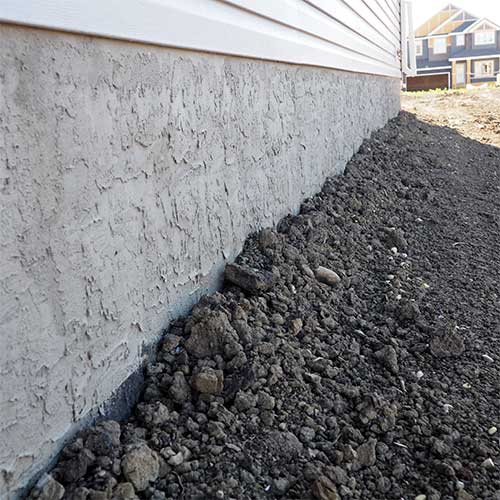
Texture tells a story as well. A classic sand or float finish from the 1980s in Beaumaris carries medium sand. A lace finish in older Westmount can hide many sins, which is why it was used to disguise minor waves. When patching, a crew that knows how to tune sand size and binder to match that street’s vintage avoids a patch that reads like a scar.
Why EIFS and acrylic finishes outperform hard-coat stucco in Edmonton
EIFS stands for Exterior Insulation and Finish System. It is a multi-layer assembly that starts with a water-resistive barrier on the sheathing. Expanded polystyrene insulation board (EPS) or extruded polystyrene board (XPS) sits next. A fibreglass mesh is embedded in a base coat. Primer and an acrylic finish coat complete the wall. The foam layer acts as a cushion. It moves with seasonal stress rather than against it. R-value increases by R-3 to R-5 per inch of foam, which means reduced heat loss and less freeze-thaw activity at the wall surface. Tests and long use show EIFS can reduce air infiltration by up to 55 percent compared to brick or wood siding. In our dry winters, that also means the indoor humidity stays more stable.
Acrylic stucco is a finish coat that uses acrylic resin instead of pure cement. It flexes more. It holds colour well. It sheds water better than bare cement. Applied over EIFS or over a base coat on lath, it resists the hairline cracking that plagues older cement plaster. That flexibility matters where Yellowhead Trail wind gusts strike west walls day after day. It also matters through 40-degree annual temperature spans that hammer houses in T5X and T5Y postal codes.
None of this makes EIFS or acrylic immune to error. Early 1990s face-sealed EIFS without drainage caused moisture problems. Modern drainable EIFS includes a dedicated drainage plane behind the foam and weeps to dry the cavity. Details such as step flashing at roofs, drip edges at trim, and backer rod with high-performance sealants at window perimeters must be correct. A crew seasoned in stucco repair Northwest Edmonton will read those details during estimate, because repair often means fixing the original oversight.
What repair really means in Northwest Edmonton, not the TV version
Repair is not a smear of caulk and a brush of paint. Repair is first understanding whether a crack is surface tension, structural movement, or moisture driven. A hollow-sounding bulge is delamination. It is not a cosmetic crack. It needs removal back to sound stucco and sometimes down to the sheathing. If sheathing is soft, it needs replacement. If the water-resistive barrier is torn or missing, a local patch must reinstate that barrier. Mesh laps must be correct. The base coat must wrap and tie the patch into the surrounding wall. Only then does texture and finish come into play.
In the field, this plays out in homes near 97 Street and 137 Avenue as small clusters of targeted cut-outs. Crews isolate the damaged zones, protect landscaping, and support window or trim edges. Repairs get sequenced with the weather. Edmonton work requires dry conditions and temperatures above freezing during cure. Winter work is possible, but it needs hoarding and heat. That increases cost and extends schedule. Any honest estimate will say so.
Common failure modes by neighbourhood era
Castle Downs streets such as Beaumaris and Lorelei often show long horizontal cracking where floor lines and lath breaks occur. The fix requires saw-cut, remove, add a control joint if missing, re-lath, and rebuild the three-coat profile before a texture-match finish. In Dunluce near Castle Downs Road, wide hairlines at garage returns point to slab heave. A flexible elastomeric patch on the surface without addressing movement will keep opening. That is a hallmark case for a control joint addition and sealant work tuned to the return angle.
In Palisades zones like Oxford, acrylic topcoats over cement base coats show spider-web hairlines after icy winters followed by quick thaws. The base is rigid. The acrylic tried to flex, but the system moved at the base. The repair uses a fibreglass-reinforced base coat to bridge microcracks, then a new acrylic finish. Where the base coat is sound, this avoids full demolition.
Griesbach EIFS repairs tend to be about details. A back deck ledger that pierced the foam without proper flashing. A downspout dumping water on a face for six winters. The system is resilient, so localized foam replacement, fresh mesh overlaps, and finish blending with correct primer are the norm. Texture matching over EIFS takes a trained hand because finish thickness subtly changes colour read. A street in T5E that was all sprayed in one builder batch will reveal any patch that skips primer or deviates in finish thickness by half a millimetre.
Why bulging and efflorescence matter more here than in milder cities
Bulges mark separation between the stucco and the lath. They act like cups. Water sits behind them longer. In our winters, that water freezes and jacks the bulge out even further. Efflorescence, the white crust you see on stucco, signals mineral-laden moisture moving from the inside to the surface. In Edmonton, it often ties to a leak above. A window head without flashing. A parapet cap that lacks a drip edge. Treating efflorescence with a surface wash ignores the thread. The next freeze will lift again. Stucco repair Northwest Edmonton requires chasing that leak a level up or a metre over. That is where local crews earn their keep.
Cost ranges that reflect real Edmonton jobmix and climate
Homeowners want price clarity without fluff. For hairline crack sealing on sound stucco, expect roughly $6 to $15 per square foot in 2026 in Edmonton. A typical 50 square foot wall section repair falls around $800 when access is simple and the substrate is intact. Water-damaged substrate work starts at $1,000 and can climb beyond $5,000 when sheathing replacement, new water-resistive barrier, and flashing corrections are needed around complex window or balcony details. Texture matching that demands test batches to align sand size and pigment usually adds $2 to $6 per square foot to the affected zone. Second-storey access that needs scaffolding adds about $200 to $400.
Season matters. Winter work requires heat and weather protection for curing. That raises cost and adds days. Summer work schedules book fast between Yellowhead Trail and Anthony Henday Drive because cure windows are shorter than homeowners think when thunderstorms roll through. A transparent written quote that ties schedule to weather is essential for any stucco repair Northwest Edmonton project.
Repair vs. Replacement in a freeze-thaw climate
Repair makes sense when damage is localized, the lath still holds bond, and the sheathing is dry. Replacement makes sense when delamination runs across long bands, when multiple elevations show persistent cracking that reopens after repair, or when water stains point to systemic flashing and barrier failures. In 1970s cement plaster across Castle Downs and older standalone neighbourhoods like Dovercourt or Prince Charles, replacement with EIFS delivers better freeze-thaw performance and energy savings. EIFS adds continuous insulation, breaks thermal bridges through studs, and carries a 5-year manufacturer material warranty standard with a 20 to 25 year service life expectation when installed correctly. In contrast, patching a wall riddled with base coat cracks and missing joints becomes a chase with no finish line.
How foundation parging fits into an Edmonton stucco conversation
Many owners google how to repair a cracked foundation after seeing a brittle base at grade or a vertical line in parging. In Northwest Edmonton, parging is the sacrificial coat that shields the concrete foundation from moisture and frost. It cracks often where downspouts splash. It also suffers when grade is too high against stucco fields. The answer is not a paint job. Parging repair runs $5 to $10 per square foot in 2026 and should pair with drainage fixes and correct stucco termination using a weep screed above grade. Failing to separate parging concerns from wall stucco issues leads to repeat calls each spring. A contractor used to stucco repair Northwest Edmonton will treat foundation and wall as one moisture system because the freeze-thaw cycle does.
Texture matching is where local crews distinguish themselves
Texture matching is not vanity. It is the difference between a long-term, invisible repair and a splotch that lowers curb appeal. A sand finish in Calder from the 1960s uses a different sand gradation than a 1980s Castle Downs mix. A Santa Barbara finish in Westmount reads smoother and shows every trowel pass. On EIFS in Griesbach, a light cat face finish can telegraph mesh patterns if the base coat is not feathered properly. The work requires test panels, pigment checks in natural light, and an understanding of how primer interacts with acrylic finish thickness. Crews Find out more doing daily stucco repair Northwest Edmonton work keep small bins of sand blends and colourants specific to these neighbourhood eras. That is not a sales line. It is field practice born of fixing patches that shouted from the sidewalk.
What owners can safely watch for without turning it into a DIY project
This is not a how-to. Old stucco carries latent hazards, including hidden rot and loose sections that can fall. That said, owners can note patterns that inform a professional assessment. Look for hairline cracks that run from window corners, bulges that sound hollow when gently tapped, chalky surfaces that leave residue on your hand, and staining that starts at parapets or balcony edges and runs down. Track downspout discharge and snow pile zones. Note whether a crack reopens every spring. Share these observations with the estimator. That shortens diagnosis and sharpens the repair plan for any stucco repair Northwest Edmonton job.
- Hairlines that radiate from window or door corners suggest movement at stress points.
- Long horizontal lines mid-wall point to lath breaks or missing control joints.
- Bulges with a drum sound indicate delamination and trapped moisture.
- White efflorescence streaks mean water is moving through and depositing salts.
- Crumbled parging at grade often traces back to downspout splash and ice build-up.
Materials and details that stand up to Edmonton’s weather
Systems that last in Northwest Edmonton share a few traits. A continuous water-resistive barrier sits behind the cladding. Flashing at every penetration is correct, with step flashing and counter flashing where roofs meet walls. Drip edges shed water clear of the face. Weep screeds let walls drain and breathe at the base. Control joints break up fields and manage movement. Sealants are backed with proper backer rod and tooled correctly. Where EIFS is used, the drainage plane is present, and mesh weights match impact zones. Where acrylic finishes are specified, primers are not skipped. Where cement plaster is used on non-residential buildings like warehouses and storage buildings, the assemblies are detailed to accept limited movement and moisture differences compared to homes. These basics are the backbone of durable stucco repair Northwest Edmonton work.
Seasonal scheduling and access on the Northwest grid
Weather is a project partner in Edmonton whether owners like it or not. Curing needs dry days and temperatures above freezing. On arterial corridors like 97 Street NW and 127 Street NW, wind tunnels add challenges. In Big Lake near Lois Hole Centennial Provincial Park, fog and damp mornings delay start times. Near Anthony Henday Drive and Yellowhead Trail, travel time affects mobilization windows. Postal codes T5T, T5X, and T5W see demand spikes right after the first thaw. Booking early reduces the chance of pushing a repair into the next freeze-thaw round. For second-storey work in Oxford and Rapperswill, access planning around landscaping and tight side yards keeps the job moving and lawns intact.
What builders and property managers weigh on re-clads
For multi-family buildings along 153 Avenue or older commercial strips near 137 Avenue, re-cladding decisions weigh life cycle against disruption. EIFS at $8 to $15 per square foot in standard conditions, and $12 to $20 per square foot with complex details, changes thermal comfort and operating costs. Acrylic over a reinforced base coat brings a dated facade back without ripping to studs when the substrate is sound. Cement plaster at $6 to $12 per square foot remains viable for impact zones or utility buildings where thermal performance is less critical. Managers who maintain properties near T5Y want a system that handles tenant wear, snow piles, and the odd hockey puck in spring. That is where heavier mesh weights at lower courses and a scuff-resistant acrylic finish pay for themselves in fewer calls.
Why Edmonton’s older stucco fails while industrial stucco seems fine
This contrast surprises owners. A hard-coat stucco wall on a storage building off Stony Plain Road can run for decades without complaint. The same cement plaster on a Castle Downs home fails early. The difference is interior moisture and temperature control. Homes breathe, trap humidity, and cycle heat daily. Warehouses do not in the same way. Residential walls move more. Freeze-thaw loads plus daily thermal cycles stress cement plaster in ways a low-heated storage building never sees. This explains the wide Alberta shift to EIFS for houses between 2000 and 2004. It also explains why a 1981 bungalow near Carlisle needs ongoing stucco repair Northwest Edmonton services while a nearby utility building still looks steady.
Why the right fix goes beyond paint
Paint, including elastomeric coatings, has a place. On sound stucco with microcracks, an elastomeric stucco coating that remains flexible can bridge small hairlines and protect against water. Expect $5 to $7 per square foot in 2026 for quality elastomeric work in Edmonton with proper prep. But paint is not structure. It cannot rebond a delaminated panel. It cannot rebuild missing base coat or replace rotten sheathing. It can trap moisture if used wrong. A good stucco repair Northwest Edmonton estimate spells out where elastomeric coatings help and where they would mask deeper issues. Coating a bulge is an example of the wrong use. Coating a south wall with sun-driven microcracks after structural repairs is the right use.
Warranty and service life context in Alberta
Manufacturers of EIFS typically back materials for five years when the system is installed to spec and registered. Properly installed, EIFS assemblies run 20 to 25 years or more in our climate. Acrylic finishes maintain colour and resist cracking across long cycles. Cement plaster can last 50 years on a suitable substrate and detail set, but Edmonton houses strain those limits without continuous insulation. Workmanship warranties on installation matter as much as material warranties. Failures in stucco repair Northwest Edmonton projects usually trace back to a missed detail rather than a failed bucket of material. Owners should read warranty terms tied to labor and ask how the contractor preserves manufacturer warranties through their process.
What sets apart a strong local repair plan
A credible plan respects the house era, the wall assembly, and the microclimate of the lot. It ties specific crack patterns to root causes. It prices access. It notes weather restrictions and cure times. It defines texture match approach and includes allowance for test batches. It calls out where control joints will be added and where flashing will be corrected. It integrates foundation parging where needed. It leaves space for unknowns behind the wall with clear unit pricing. Most of all, it reads like the crew walked the site, not like a template. That is what long-running stucco repair Northwest Edmonton teams deliver because they see the same problems up and down 97 Street from T5E to T5W.
A quick reality check on DIY questions and risk
Owners often ask if they can tackle a small crack, especially after reading articles on how to repair a cracked foundation or how to seal stucco hairlines. The risk is small on true surface crazing. It is serious on cracks that sound hollow around them or run from stress points. The wrong sealant, the wrong patch compound, or the wrong primer can cause adhesion failure that costs more to undo. On two-storey elevations, ladder falls and contact with power feeds create safety hazards not worth the gamble. This is why professional crews trained in stucco repair Northwest Edmonton carry the right materials for the specific wall type and the right access gear for tight side yards common along 127 Street and 137 Avenue corridors.
Why local proximity matters as much as credentials
Depend Exteriors operates out of 8615 176 Street NW, Edmonton, in the T5T postal code with quick access to Anthony Henday Drive for cross-city service and Yellowhead Trail for the north corridor. That location shortens response time to Castle Downs, Big Lake, the Palisades, Griesbach, and the standalone neighbourhoods west of 97 Street. When a mid-cure thunderstorm suddenly rolls in, a close crew can protect a wall fast. When a second trip is needed for texture blending on a cloudy morning instead of in full sun, local routing makes it possible the next day. In stucco repair Northwest Edmonton work, these small logistics win quality and reduce risk.
Depend Exteriors approach at a glance, then the next step
As a family-owned and family-operated contractor led by Hasan Yilmaz, Depend Exteriors brings 13-plus years of Edmonton field experience across residential and commercial stucco, EIFS, acrylic, parging, stone, and exterior caulking. The team is Alberta licensed and bonded, carries liability insurance that protects client property, and works a six-day schedule with extended hours that fit how homeowners live in Northwest Edmonton. The company’s estimates reflect local freeze-thaw patterns, the 2000 to 2004 Alberta shift from cement plaster to EIFS, and the specific finish textures common to Castle Downs, the Palisades, Griesbach, Big Lake, Westmount, Calder, and the broader Northwest grid. Manufacturer-backed material warranties on EIFS systems and a workmanship warranty on installation tie service and accountability together. For owners comparing options, 2026 cost ranges are transparent from the first written quote.
To move a project forward, call +1-780-710-3972 or visit dependexteriors.com to request a free estimate. Share photos of cracks, bulges, or stains and your address in T5X, T5Y, T5W, or T5T for quick routing. A site visit will map the freeze-thaw patterns on your walls, define whether repair or replacement delivers better value, and provide a clear plan for stucco repair Northwest Edmonton that will stand up to another winter.